Self-actualizing without institutional permission
I wish the fascists were more self-conscious

Each time I try to write this, I’m held back by the notion that I lack expertise.
I want to write about ‘self-actualization,’ but to do that, I need to define what self-actualization is.
Just defining the ‘self’ is a life's work. I am not versed in philosophy, or equipped with the expertise to talk about the ideas of enlightenment a term like ‘self-actualization’ brings up.
I pause at these incompetencies, question marks and indefinite meanings; they stall me, poke fun at me and freeze me in inaction.
In this self-consciousness, I am, ironically, prohibited from writing about overcoming the feeling of not being enough and the need for external validation, because of my feelings of not being enough and the need for external validation. Yikessss…
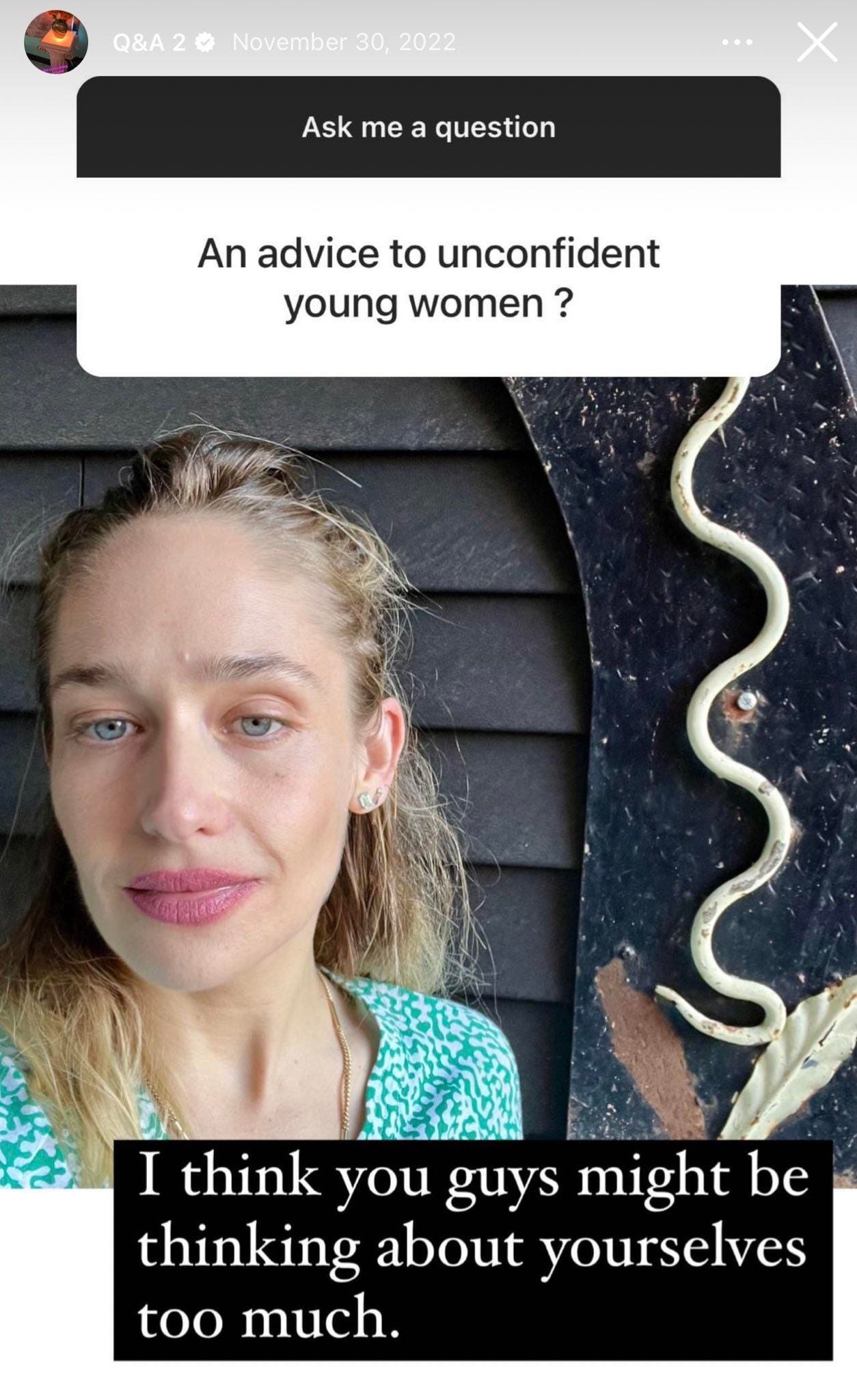
But this leads me back to the idea that so many of us refuse to do things because we are scared of being wrong, not good enough, or simply perceived.
And this is also undeniably political, because those who limit themselves in this way, are often those who are marginalized or socialized into self-policing, and those who LACK the self-consciousness to second-guess or doubt themselves, are often those who end up in roles of power, making decisions that harm the rest of us.
Self-actualizing in our creative lives
When I talk about self-actualizing, I mean in the sense of coming into your most you self. Your most ‘authentic’ self, before the word authentic became a buzzword and its meaning skewed.
I think of self-actualization as reaching a state of being in which you make decisions based on self-knowledge, awareness, and introspection, e.g. you have embarked on some kind of process that has led to a clearer understanding of your purpose, values, and existence, and ultimately given you the ability to articulate and realize these leanings and desires in your everyday world.
My ‘passion’ lies in the arts - I am a v emotional girl and I need to do something everyday that makes me feel connected to that.
I am perpetually seeking this actualized version of my life, where I can be in a job that makes me believe my passion is true.
As a child, I danced, went to acting classes, wrote stories, and was always drawing or painting or making something. As an adult, my path was directed by my art teacher telling me I should study English Literature at university because I only got an A in my art exams due to the writing element not the practical (!!)
Following this, I worked in corporate writing for several years because I never got the jobs I applied for at galleries, museums or publishing companies. I didn’t know anything about these industries or how to enter them.
I know I need to work with some kind of art in my career - whether that is writing, working in a museum, or something movement-based, - and I still don’t fully believe that’s possible, because these roles are so competitive, I have been rejected many times that I start to think i’m not meant for these places. Fuck institutions!!!!!
This is not meant in a woe is me, sentiment, but more so it is me thinking about how self-doubt is born and sustains itself, and how not getting a ‘yes’ from institutions leads to a feeling that you are not that person, which in turn brings a sort of mini identity conflict?


Self-consciousness, self-policing and self-restriction in creative work, or in the effort to become the truest version of you, are a very icky after effect of capitalism.
The internal critic often carries the voice of systems that historically demanded women and marginalized people make themselves smaller, more palatable, less demanding and less threatening.
The attempt to self-actualize becomes a perpetual negotiation between authentic expression and anticipated judgment, leaving us exhausted and defeated before we've even begun.
The words of my amazing university supervisor echo in my head, in response to the hollow overuse of ‘decolonial theory’ amid the firing of global majority staff and mistreatment of students and neoliberalisation of the university:
✨ the only way to decolonize the university is to burn it down. ✨
Sometimes I feel like I am seeking something from these institutions that they simply were not built to provide.
Over the past year I have been working at the J. Paul Getty Museum, which I think remains the world’s * richest * museum (?) and has a hugeeee amount of resources that has allowed me to grow my understanding of art history and engage in museum education, research and exhibitions in a way that has been extremely meaningful to me.
My time here has been amazing and I am forever grateful for this experience. But as my contract comes to an end and I enter another stage of career instability, and as I watch as the US government systemically defunds the arts and any institution that showcases ‘gender ideology’, and erases trans and queer history from federal websites, I feel discomfort with my objective of ‘career growth’ at one of these institutions as a way of actualizing my desired creative life.
I have been thinking about the things I have denied myself because I lacked institutional or societal permission - e.g. I didn’t apply to art school! - This shaped my whole career path, i’ve worked as a copy-editor for several years, as writing was the skill I developed through studying English Literature.
Less dramatically, I remember being a teenager and getting made fun of for having pink hair and wearing purple jeans and then shifting to a more conformative style (lol). I still feel a kind of repression with this and a curiosity about how I would self express, how we would all self express, if social approval was not such a big factor.
There must be other ways for us to allow our creative lives and our truest selves to blossom, without institutional permission and for now I will seek others who allow me to bring that desire into reality.
I will finish with a quote from Stefano Harney and Fred Moten’s The Undercommons: Fugitive Planning and Black Study:
We cannot say what new structures will replace the ones we live with yet, because once we have torn shit down, we will inevitably see more and see differently and feel a new sense of wanting and being and becoming. What we want after ‘the break’ will be different from what we think we want before the break and both are necessarily different from the desire that issues from being in the break.